
In the movie, The Imitation Game directed by Morten Tyldum, tells the story of genius Alan Turing and his life story starting from his recruitment to Bletchley park and through his decryption of the Enigma Code the Nazis were using for random and unplanned attacks on the British as well as his eventual suicide. The movie was lauded and nominated for several oscars, including a Best Picture and Best Director nomination. While this movie was a commercial and critical success, the message about empire’s treatment towards a man who contributed so much to saving millions of life is interesting to take note.
Alan Turing was known for many things, one of those things being his significant achievements in the areas of science and math. He cracked the infamous enigma code, a complex code that the British would change everyday in order to commit unplanned attacks on the people in Britain. In the movie, Alan Turing meets Joan Clark, and with a team of talented mathematicians, he finds a way to decrypt this extremely difficult code. However, after he does so, he is later exposed as gay and was subject to the cruelty of chemical castration. This caused him to commit suicide. This makes me feel extremely angry and sorrowful. How can a man who turned the tide in World War II be shunned and outcast from his society?
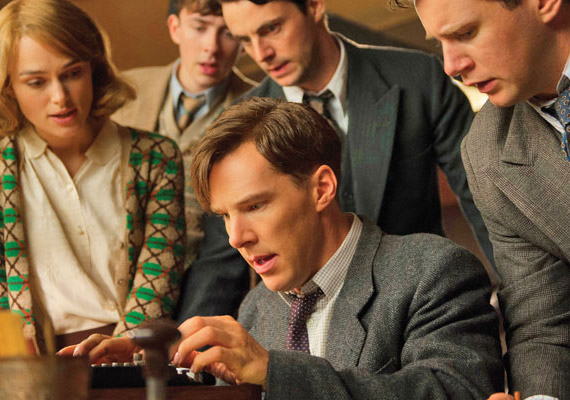
The answer lies in the cold hearted truth about empire that this movie touches on. The British empire had its purpose in using a man like Turing. Once they did use him, they had no purpose for him anymore, and suddenly all of the work that he had done was replaced with this new identity of him committing “gross indecency”. In the movie, Benedict Cumberbatch uses different acting techniques in order to get into the mind of master Alan Turing. He researched extensively about the kind of person he was: cold, quiet, reserved, and somewhat arrogant. He the defined his objectives in each scene as well as his super objectives. Once he knew what he wanted to achieve by the end of the movie, Cumberbatch defined his relationship that he had with Joan Clarke (Keira Knightley), and more importantly, the extremely complex and deep relationship he had with himself. While Turing was not a man of many words, Cumberbatch portrays this silent confidence aura exuding from him beautifully. This is also further portrayed within the transition from this slight arrogance to the complete mental deterioration that he experienced because of the chemical castration.
Along with Cumberbatch, Knightley portrays her supporting role of Joan Clarke stupendously. While Cumberbatch carried the movie with his understated layered acting, Keira Knightley lifted the movie by being one of the only companions in Turing’s life. Knightley portrays this role perfectly. She shys away at times, giving Cumberbatch his moment to tell the tragic yet necessary story of Alan Turing, yet she shares the also important story of Joan Clark; the women who loved him. Knightley also portrays how Clarke defies the norms of her time by being one of the most brilliant minds in science and math, and being instrumental in supporting Turing in his difficult endeavour. As the leading woman of the story, Knightley packs in her own complex storyline of being married to someone she could never truly have. While many of us sympathize with the heartbreak that Turing went through, many people empathize with what Joan Clarke went through, as she faced a type of rejection that was never in her hands. Knightley also portrays her as a woman with many layers. On one hand, she is the science and math oriented woman who possesses an extremely intelligent mind, yet on the other hand she is also someone who fell in love, and never experienced that love back.
Through their acting choices, and the heartbreaking story of Alan Turing, Imitation Game is truly a movie made to share an important story. As someone who went to an arts school, I am in awe of the way both Cumberbatch and Knightley went about approaching these difficult roles. I am more in awe, however, with Mr. Turing. While he could have hid who he was very easily, he slashed away any misconceptions people had of him and was authentically himself. While many of us do not share the same story as Alan Turing, his passion and commitment to his work and the strength he exuded through being treated awfully makes him not only a true genius in the workings of science and math, but also a true inspiration as a person.


 Movie Mania
Leave a comment